
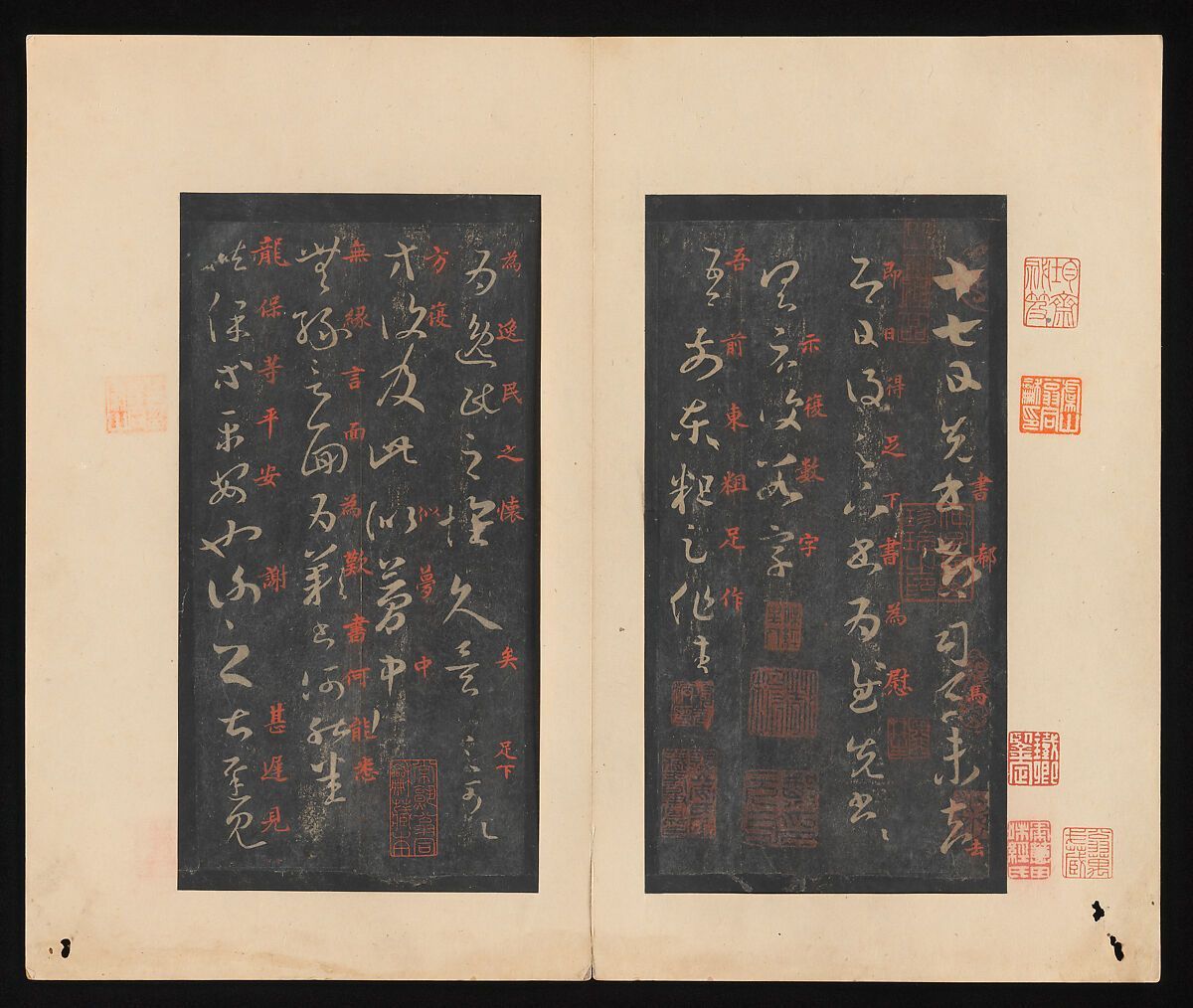
"On The Seventeenth Day"
Wang Xizhi
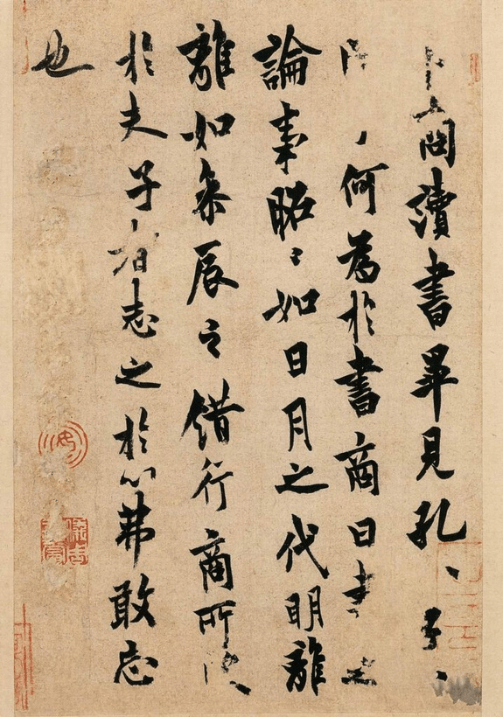
Chinese Calligraphy
Lindisfarne Gospels
Latin Vulgate Sample
Theological Calligraphy
Spiritual Hand Writing
“Typography is the craft of endowing human language with a durable visible form, and thus with an independent existence. Its heartwood is calligraphy — the dance, on a tiny stage, of the living, speaking hand — and its roots reach into living soul, though its branches may be hung each year with new machines.”
(Robert Bringhurst)
Calligraphy, the art of beautiful handwriting, has a long and rich history that spans cultures, religions, and centuries. It developed not only as a means of communication but also as a form of artistic expression, religious devotion, and cultural preservation. While typography is not calligraphy, with much of type carefully structured, straight-backed and neatly drawn and focused on lettering for printing readability, both art forms involve visual expression of language. Both focus on the shape, proportion and beauty of letters. Both reflect religious, historical and cultural influences on writing styles. Both are used for artistic and decorative purposes in design, and much of type has been greatly influenced by calligraphic styles.
Chinese Beginnings
Long before Gutenberg in 1450, printing from moveable type was invented in China in the 1040s by the scholarly engineer Bi Sheng. Fêng Tao, who a century or more after the beginning of block printing improved the art and applied it to new uses, is usually regarded by Chinese as the inventor of printing, and holds much the same place in Chinese history that Gutenberg holds in that of Europe. From his day printing became a fine art.
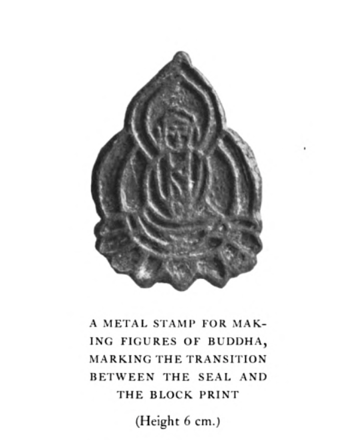
Chinese calligraphy is among the oldest and most continuously practiced forms of calligraphy, from the second millennium bc. The precise origins of Chinese printing remain obscure. Religious seals had been used since long before the Han period (202 bc–220 ad), and the Chinese had later used large seals carved from hardwood to reduplicate Taoist religious charms in large numbers. Small wooden stamps similar to those employed in printing textile patterns were used for the replication of images of the Buddha.[1]
In Chinese calligraphy and typography, each character is considered to occupy a square space of equal size, the characters being arranged in vertical columns, usually separated in traditional printing by a fine line. The Chinese compositor was thus faced with none of the complexities of spacing and layout that confront the Western typographer. This “block printing” method lasted and remained standard even into modern times.
The blocks for fine printing were made from a hard close-grained wood, usually pear or jujube. The surface was prepared with a sort of size. The copy for the page to be printed was written by a copyist on a very thin paper, and this was laid face down on the surface of the block while the size was still wet. The engraver then cut the block around the characters. A page printed in this way could thus reproduce any style of calligraphy, or any mixture of styles, any size or variety of sizes of character, and could equally easily accommodate both text and illustrations. The blocks could be corrected by recutting, by inserting plugs into the block and recutting over them, and by minor trimming.[2]
Chinese calligraphy developed as both a visual and spiritual art form. Writing was done with brush and ink on paper or silk. Notable calligraphers included Ouyang Xun (557–641 bc), a Tang Dynasty master of what is called “regular script.” During the Tang Dynasty, he was a censor and scholar at the Hongwen Academy, where he taught calligraphy. He later became the Imperial Calligrapher and inscribed several major imperial steles. Wang Xizhi (303–361 BC), known as the “Sage of Calligraphy,” produced “On the Seventeenth Day,” a selection of twenty-nine letters under the sponsorship of the Tang emperor Taizong.[3]
Yan Zhenqing (709–785) was known for his bold and dynamic style. Su Shi (1037–1101), a scholar and poet, practiced expressive cursive calligraphy. Wikipedia notes that approximately 2,700 poems and 800 letters penned by Su Shi have been preserved to date. His mastery spanned across various forms, including the shi, ci and fu styles of poetry, as well as prose, calligraphy, and painting. While a significant portion of his poetry is in the shi format, it is his 350 ci style poems that largely cemented his poetic legacy.
In contrast to western calligraphy, diffusing ink blots and dry brush strokes are viewed as a natural expression rather than a fault. While western calligraphy often pursues font-like uniformity, Chinese calligraphy emphasizes more on expressing one’s emotions.[4]
Buddhism and Chinese Calligraphy
The relationship between Buddhism and Chinese calligraphy is important because it illustrates how a religion entering a new culture can transform and be transformed by that culture. Buddhism arrived with Sanskrit and other Indic textual traditions.
In China it became expressed through Indian Buddhist philosophy plus Chinese language, then Chinese characters, flowing into Chinese manuscript culture and Chinese aesthetics. The result was something historically distinctive — Buddhist ideas became inseparable from the visual and physical culture of Chinese writing —
The Diamond Sutra, the section of the Buddhist scriptures which appears in this roll, was a favorite book with early printers, whether in China, in Japan or in Central Asia. It consists of a number of discourses by the Buddha to his aged disciple Subhuti on the subject of the non-existence of all things. While it is taken up in the main with very abstruse teachings, the author has a very high opinion of the importance of the book that he is writing. Over and over again the Buddha is represented as describing to Subhuti the infinite merit and rewards to be gained by him who transcribes the book and thus spreads abroad its doctrine. “Whatever place,” he says, “constitutes a repository for this sacred scripture, there also the Lord Buddha may be found.”[5]
Buddhism gave Chinese calligraphy an important spiritual subject and practice, while Chinese calligraphy gave Buddhism in China a powerful visual language. The connection eventually extended beyond China into Korea, Japan, and Vietnam, where Buddhist scripture copying and Zen/Chan-inspired calligraphy became important parts of their own writing and artistic traditions.
A fundamental concept in Chinese calligraphy is often expressed through the relationship between xin (heart/mind) and bi (brush). The brush is not merely a tool. Its movement reveals the writer’s concentration, energy, rhythm, confidence, restraint, and emotional state. This became particularly compatible with Chan Buddhism’s interest in the relationship between mind and action. The ideal was not simply to produce beautiful characters but to produce writing that appeared alive.
Several Buddhist ideas have particularly interesting relationships with Chinese calligraphy. Impermanence. Every brush stroke exists only temporarily. Ink spreads, paper ages, and the physical work eventually deteriorates. This can be understood in relation to the Buddhist doctrine of impermanence. Emptiness. Mahāyāna Buddhism emphasizes śūnyatā, usually translated as “emptiness.” In calligraphy, the empty spaces surrounding and within characters are not simply unused areas. They participate in the composition. Ink plus empty space gives visual balance.
This does not mean that traditional Chinese calligraphy is literally an illustration of Buddhist emptiness, but the concept provides a particularly fruitful way of thinking about the relationship between presence and absence.
Non-attachment. Chan practice often emphasizes acting without excessive attachment to the result. The calligrapher prepares, concentrates, and executes the stroke. Once the brush touches the paper, the stroke cannot easily be corrected. This gives calligraphy an unusually strong sense of irreversibility and immediacy.
One of the most important sources for understanding Buddhism and Chinese calligraphy is Dunhuang, located along the ancient Silk Road in northwestern China. The Mogao Caves contained thousands of manuscripts, paintings, and other objects. The famous “Library Cave” (Cave 17), sealed around the early eleventh century, preserved an extraordinary collection of Buddhist and secular manuscripts.
These manuscripts demonstrate different calligraphic styles, changing handwriting conventions, Buddhist scripture transmission, scribal practices,
paper production, book formats, and the interaction of Chinese and Central Asian cultures. Dunhuang is therefore one of the great historical windows into the relationship between Buddhism, writing, printing, and calligraphy.
Writing a Buddhist scripture could itself be considered a meritorious religious act. A person might copy a sutra, as an act of devotion, to accumulate religious merit, to honor a deceased relative, to dedicate merit to someone else, as a meditation exercise, or simply to preserve and transmit Buddhist teaching. The act of writing was therefore more than mechanical transcription. The physical process of forming each character could become a disciplined spiritual practice.
Chinese calligraphy has traditionally been understood as revealing something of the character and discipline of the person who writes it This became particularly compatible with Chan Buddhism, known in Japan as Zen. Chan emphasized direct experience, concentration, simplicity, disciplined practice, spontaneity, and freedom from excessive intellectualism.
Calligraphy could embody these principles. The calligrapher concentrates on the brush, ink, paper, movement, breathing, and formation of each character. The writing of the character becomes part of the practice of cultivating the mind. A Buddhist calligrapher did not necessarily regard calligraphy as merely an illustration of Buddhist ideas. The disciplined act of writing could itself become a form of practice.
Japanese & Korean Calligraphy
Both Japanese and Korean calligraphy developed from Chinese roots. As in all early calligraphic forms and writings, such calligraphy was heavily influenced by Buddhism. Kukai (774–835) was a monk who brought Chinese calligraphy to Japan. His importance in Japanese Buddhism has developed stories and legends, one of them which attributes the kana syllabary to him, with which the Japanese language is written to this day. Ono no Michikaze (894–966) took a first step in Japanizing the art of calligraphy from China, with strong influence from Wang Xizhi and Wang Xianzhi.Fujiwara no Kozei (1100s) popularized calligraphic styles imported from China. He was called the master of the “way of writing.” Kim Jeong-hui (1786–1856) in Korea developed the Chusa style, merging Chinese and Korean aesthetics.
While I am not a Buddhist or subscribe to its teachings, the theological shadow of Buddhism is obvious to this period in historical typography.
Early Christian Calligraphy/Typography
Greek classical and Byzantine scripts, along with the Roman script, were important in developing western calligraphy and later typography. Of all periods of typographic history, I must say that I am most fascinated with what is called the Manuscript Era (600 bc to 1450 ad). This era saw scribes meticulously handwriting manuscripts, using calligraphic scripts like Uncial.
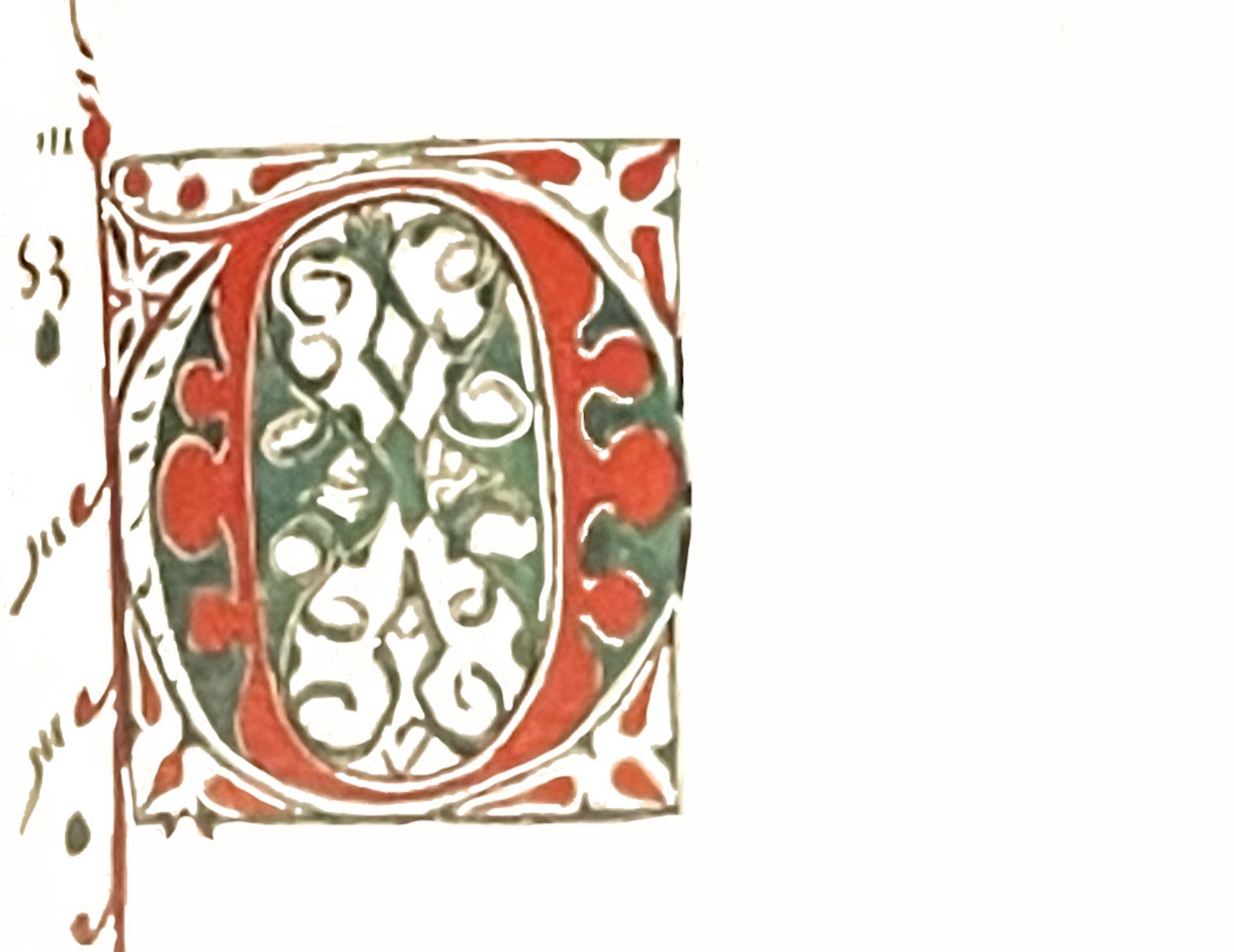
The fancy letter “O” is from Psalms and Canticles With Translation and Commentary, Middle English, England, ca. 1400.[6] Illuminated manuscripts, decorated with ornate initials, illustrations and borders were created by gifted and skilled scribes and artists.
Insular script was a medieval script system originating in Ireland that spread to England and continental Europe under the influence of Irish Christianity. Combined Irish and English book artists achieved the Insular half-uncial, based upon the standard uncial writing but admitting such cursive features as ascenders (b, d, f, h, l ), descenders ( f, g, p, q), and connections between letters.
In more cursive form, another type of insular writing was developed at the end of the seventh century with possible connection to Roman models, made in primitive minuscule and not in semi-Uncial. It is called Insular Minuscule, characterized by “hatching” of letters, that is the use of closely spaced lines or strokes to create shading, texture, depth or tonal variation in letterforms. Often used in engraving, etching, woodcut printing and pen-and-ink calligraphy, there are sharp arches in the curves, prolonged descenders and some particular ligatures.
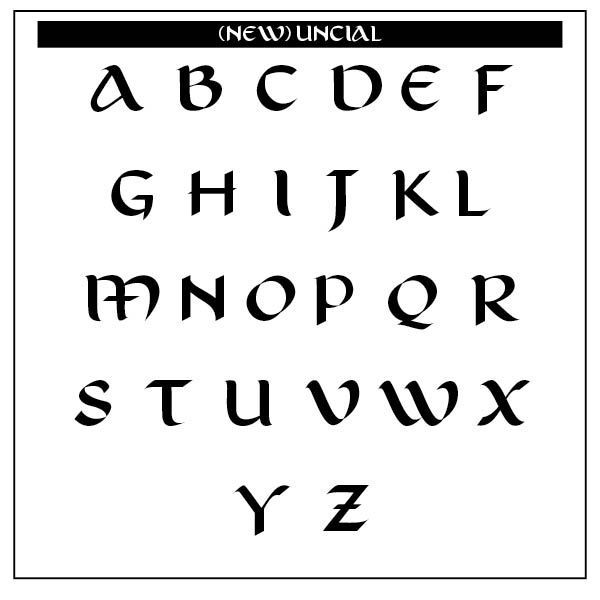
The New Uncial Display typeface takes inspiration from uncial writing. Such writing came from an iconic medieval system found in religious manuscripts from 800 bc. The letter designs served as a basis for the development of the Roman alphabet in force in the Western world. The pictured font, New Uncial, was born from careful calligraphy, resulting in an open type display font with clean glyphs, upper and lower case characters, easy to apply and capable of bringing impact to graphic pieces that seek aesthetic appeal.[7] Note the sign of the cross on the capital M.
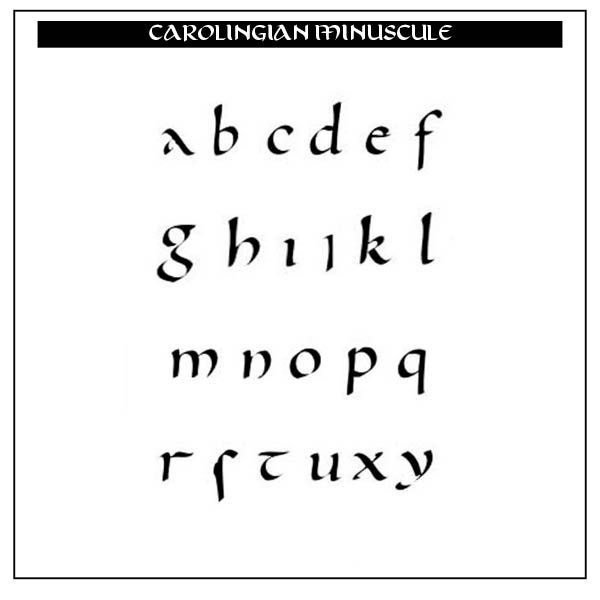
In the sixth through tenth centuries, lower case letters (called minuscules) were formed, with modern lettering evolving from the Carolingian scripts. The Carolingian Minuscule below develops from strictly capital letters to small lettering.[8] The Emperor Charlemagne used these letters as an educational standard. Wikipedia notes here —
Early uncial script most likely developed from late rustic capitals. Early forms are characterized by broad single-stroke letters using simple round forms taking advantage of the new parchment and vellum surfaces, as opposed to the angular, multiple-stroke letters, which are more suited for rougher surfaces, such as papyrus. In the oldest examples of uncial, such as the fragment of De bellis macedonicis in the British Library, of the late 1st–early 2nd centuries, all of the letters are disconnected from one another, and word separation is typically not used. Word separation, however, is characteristic of later uncial usage.
As the script evolved over the centuries, the characters became more complex. Specifically, around ad 600, flourishes and exaggerations of the basic strokes began to appear in more manuscripts. Ascenders and descenders were the first major alterations, followed by twists of the tool in the basic stroke and overlapping. By the time the more compact minuscule scripts arose circa ad 800, some of the evolved uncial styles formed the basis for these simplified, smaller scripts.[9]
The Lindisfarne Gospels
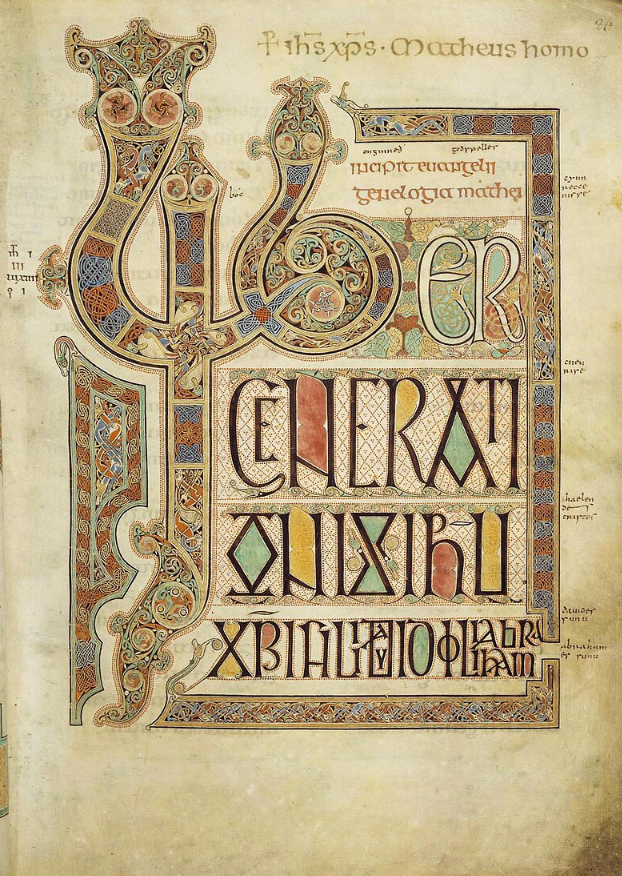
Composed in the eighth century, this illuminated manuscript gospel book was produced in the monastery at Lindisfarne off the coast of Northumberland. The Gospels are presumed to be the work of a monk named Eadfrith, who became bishop of Lindisfarne in 698 and died in 721. They are richly illustrated in the insular style, originally encased in a fine leather treasure binding covered with jewels and metals. It took approximately ten years to create. Its pages are vellum. The book is 516 pages long, and the text is written “in a dense, dark brown ink, often almost black, which contains particles of carbon from soot or lamp black.”[10]
Typographers in Europe and the western world used frames, or coffins, made of planks of wood, in which rectangular hollows were cut the size of the pages to be printed, and these types, after having been string together, were placed in horizontal lines. Before this, printing of block books was done by placing the paper on an inked surface and rubbing the back.
Simply constructed presses, prototypes of the modern hand press, were used for printing playing cards and image prints. They were then colored by means of stencils. A French made printing card, dated 1423, is 8 x 11 inches in size and is the oldest dated specimen of such printing. Such means gave us the word “printing.” The Biblia Pauperum (Bible of the Poor) was another block book prior to the invention of typography.
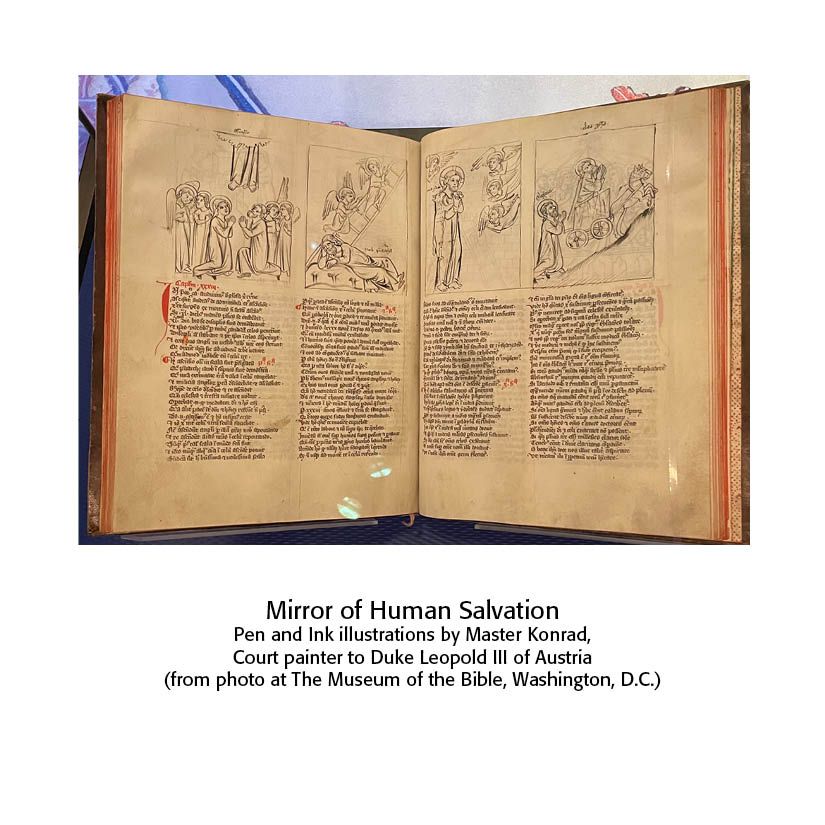
The Speculum Humanse Salvationis (Mirror of Human Salvation) represents the transition from block books to type printed books. Of the sixty-three pages, twenty are printed from wood blocks and forty-three from separate types. It consists of rhymed Latin couplets that show how events in the Old Testament prefigured events in the New Testament. The image below is from Austria, about 1370.
These hand-crafted letters and books reveal biblical beauty marks. They pre-date Victorian typography, being hand written and carefully transcribed onto vellum and other materials.
Latin Vulgate Bible
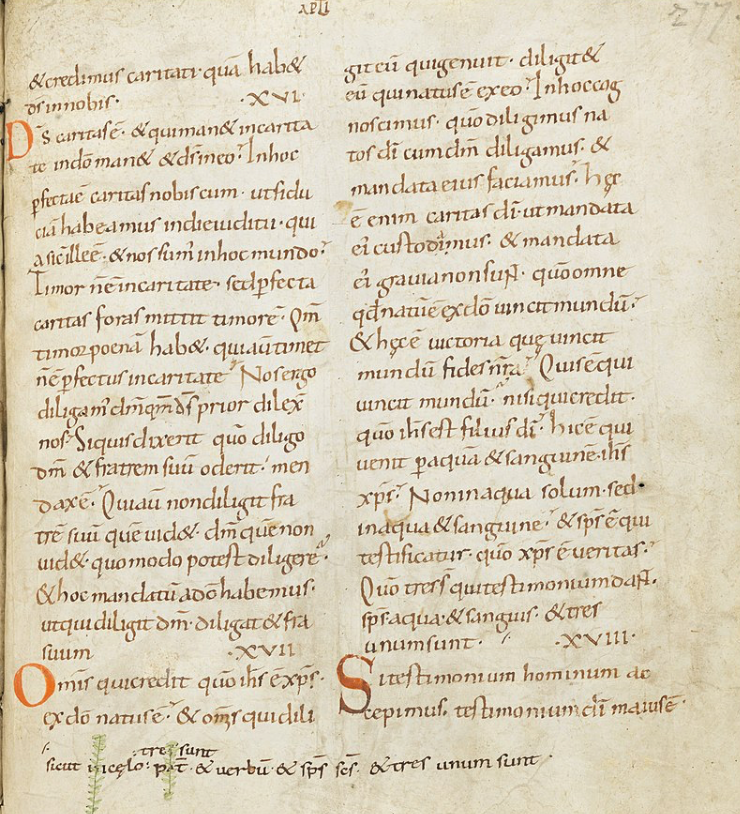
The Bible was translated into Latin by St. Jerome in the late fourth century. The Vulgate became the standard Bible used by the Roman Catholic Church for over one thousand years. It was copied by hand for centuries and was often written in large, illuminated manuscripts, showcasing incredible artistry.
In 382, Pope Damasus I commissioned his secretary, the scholar St. Jerome, to create a Latin translation of the gospels to align directly with the original Greek to correct errors in popular translations. This was the beginning of the Latin Vulgate Bible. “The Vulgate became progressively adopted as the Bible text within the Western Church. Over succeeding centuries, it eventually eclipsed the Vetus Latina texts. By the thirteenth century it had taken over from the former version the designation versio vulgata (the “version commonly used”) or vulgata for short.”[11]
The Catholic Church affirmed the Vulgate as its official Latin Bible at the Council of Trent (1545–1563), though there was no single authoritative edition of the book at that time in any language. The Vulgate did eventually receive an official edition to be promulgated among the Catholic Church as the Sixtine Vulgate(1590), then as the Clementine Vulgate (1592), and then as the Nova Vulgata (1979). The Vulgate is still currently used in the Latin Church. The Clementine edition of the Vulgate became the standard Bible text of the Roman Rite of the Catholic Church, and remained so until 1979 when the Nova Vulgata was promulgated.[12]
Having translated the Psalms from Origen’s Greek Hexapla, “Jerome translated all of the books of the Jewish Bible—the Hebrew book of Psalms included—from Hebrew himself. He also translated the books of Tobit and Judith from Aramaic versions, the additions to the Book of Esther from the Common Septuagint and the additions to the Book of Daniel from the Greek of Theodotion.”[13]
The translators of the King James Bible, while using five different Greek and Hebrew manuscripts, also consulted the Latin Vulgate translation, since it was so widely used at the time. Where the Vulgate was correct, they wanted to stay with the structure and wording.
What became important in such calligraphy was a concern to honor God as Creator and Lord of all. Fanciful and descriptive embellishments were more than decorative art. They represented a love for God and his Word, the Bible, that paved the way for later mechanical printing.
Notes
1. Cited by Denis Twitchett, Printing and Publishing In Medieval China (New York: Frederick C. Bell Pub., 1983), 13.
2. Twitchett, 70
3. Print from Wikipedia by www.metmuseum.org/art/collection/search/39899
4. www.chinaonlinemuseum.com/ calligraphy.php
5. Thomas Francis Carter, The Invention of Printing in China and Its Spread Westward (New York: Columbia University Press, 1925), 41.
6. Many of the scribal versals and images used in this chapter come from a recent visit to the Museum of the Bible in Washington, D.C., 2024. They have been taken with my camera and then digitized for use in this text. The opening chapter calligraphy letter “C” is from Jordan Calligraphy at https://loveleighloops.com/blog/beautiful-calligraphy/.
7. Thanks to Lucas Riedi for sharing this awesome typeface.
8. Thanks to J. Pemery (https://commons.wikimedia.org/w/index.php?curid=19018724)
9. From https://en.wikipedia.org/wiki/Uncial_script.
10. Information from Wikipedia at https://en.wikipedia.org/wiki/Lindisfarne_Gospels.
11. From https://en.wikipedia.org/wiki/Vulgate
12. Ibid.
13. Ibid.