

Swiss Type
Clear and Useful Harmony
“Neither may the clarity of the single letter be given up for the sake of rhythm, nor may formal beauty be sacrificed to mere clarity or misconceived utility.’”
(Jan Tschichold)
DESIGNERS LIKE JAN TSCHICHOLD were foundational to many of the Swiss design principles. This style evolved from Constructivist, De Stijl and Bauhaus design principles, particularly the ideas of grid systems, sans-serif type and minimalism. Emerging in Switzerland during the 1940s and 1950s, this typography, also known as the International Typographic Style, directly responded to the type chaos of Dada and the stylization of Art Deco.
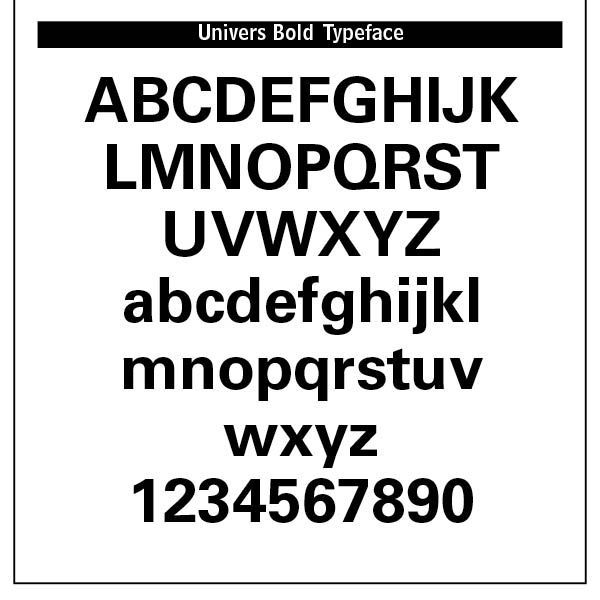
The Swiss style emphasized readability, visual harmony and universality. Clarity, objectivity and functionality were key components. Its underlying philosophy was not primarily to express personality or historical associations, but to create a typeface that was clear, neutral, rational, and universally useful. Contributors included Max Miedinger, creator of the Helvetica typeface and Adrian Frutiger, creator of the Univers typeface, both in 1957. The opening versal here is from Univers Bold.
Helvetica’s “Neutrality”
Robin Williams, a noted typographer, says Helvetica, though immensely popular in the 1960s and 1970s, became passé. He says, “Just because it’s on your computer doesn’t mean you have to use it. The greatest single thing you could do for your publications is to invest in another sans serif (“without feet”) face, one with a strong, bold black version in its family. As with all trends, Helvetica will someday be back in style—in about two hundred years.”[1]
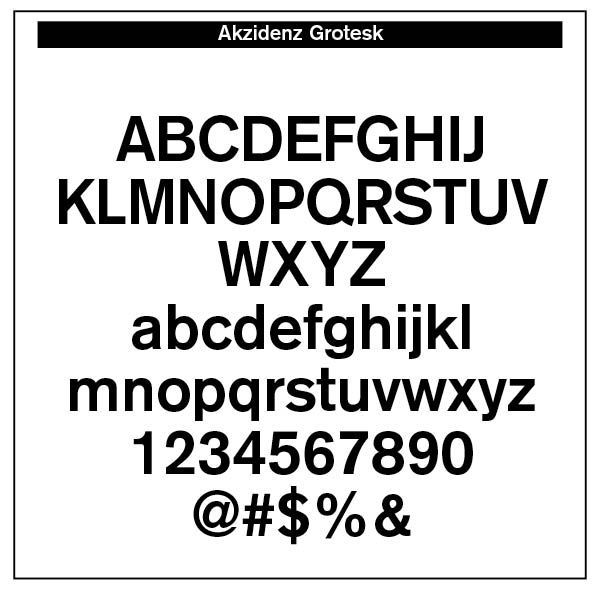
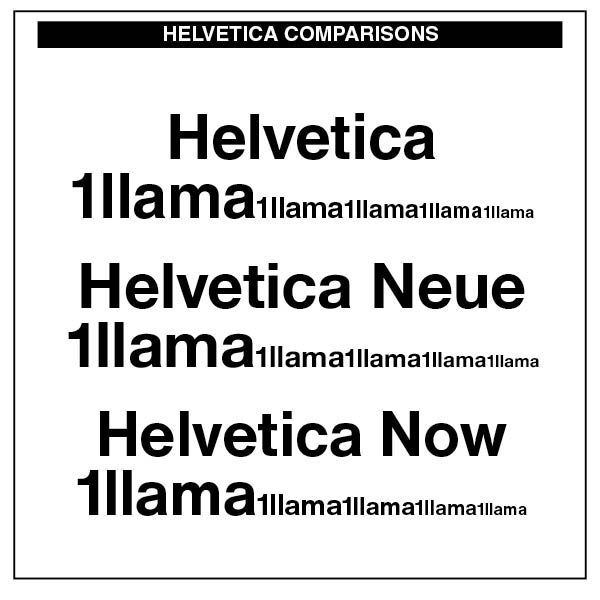
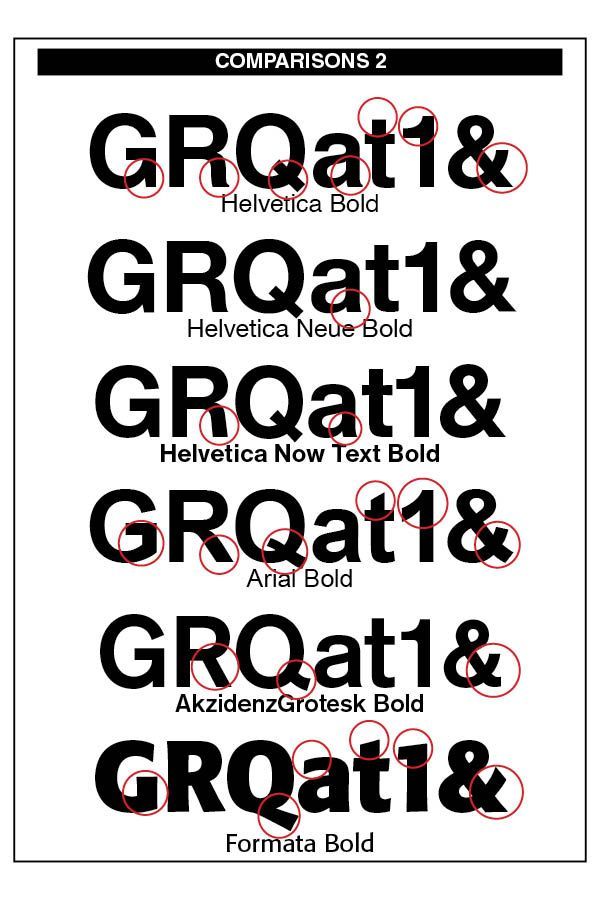
In my companion book, Typographical Beauty Through the Ages (Lulu Press, 2026 Revised), I offer an in-depth look at the development of the typeface Helvetica from the 1896 typeface Akzidenz-Grotesk, its comparisons to various other sans-serif faces, and its newest renderings by Monotype.
Helvetica remains influential because it successfully occupies a middle ground between geometric abstraction and humanist legibility. It is not as geometrically severe as some geometric sans serifs, such as Futura, nor as visibly humanist as later typefaces such as Frutiger. Its strength is its controlled ambiguity — it can appear corporate, governmental, technological, editorial, commercial, or ordinary depending on its context.
Helvetica is the typographic expression of a Modernist ideal that communication should be clear, rational, functional, and internationally accessible — with the paradox that its attempt at neutrality ultimately gave it an unmistakable cultural identity of its own.
In comparing faces like Helvetica to postmodern typefaces, the neutrality of Helvetica contrasts with the subjectivity of postmodern type. While postmodern type is culturally specific, Helvetica is universal in use and appeal. Postmodern faces are emotional; Helvetica is rational. Helvetica is ordered, while postmodern faces are disrupted. Helvetica honors time bound grids, while postmodern faces practice typography deconstruction. Helvetica is “invisible” typography, while postmodern type is blatantly visible. Helvetica sees its designer as mediator between author and text, while postmodern designers see themselves as author, interpreter and trend setter. This debate is one of the most important philosophical conflicts in twentieth-century graphic design.
Theologically and philosophically, Helvetica focuses on objective communication that is neutral to cultural winds and waves. Swiss typography attempted to remove unnecessary cultural and stylistic signals from communication. A typeface should ideally work across languages, countries, industries, and social contexts.
Helvetica’s name itself — referring to Switzerland — became somewhat ironic in this respect. Although distinctly Swiss in origin, Helvetica became an international typeface. Helvetica became particularly important during the expansion of corporate identity programs in the 1960s and 1970s.
Large organizations wanted visual identities that communicated efficiency, technological modernity, reliability, internationalism, institutional authority, and consistency. Helvetica was exceptionally suitable for this purpose. It could function on everything from a tiny corporate form to a large architectural sign. This helped transform Helvetica from a typeface into something approaching a visual language of institutional Modernism.
By the 1970s and 1980s, it appeared everywhere in corporate identities,
transportation systems, government publications, signage, corporate forms,
advertising, packaging, newspapers and magazines, and public information. It became to defacto sans-serif font included with the Macintosh computer.
Consequently, Helvetica acquired its own cultural personality.
All of this demonstrates the God-ordained orderliness of his created world. The best words that paint this picture come from Paul’s summary statements in his letter to the Romans — “Oh, the depth of the riches and wisdom and knowledge of God! How unsearchable are his judgments and how inscrutable his ways! ‘For who has known the mind of the Lord, or who has been his counselor?’ ‘Or who has given a gift to him that he might be repaid?’ For from him and through him and to him are all things. To him be glory forever. Amen.” (Romans 11:33–36)
Helvetica displays the universal desire God has implanted in humanity for type that can be trusted in all places, used in all places, and remains the “go-to” font for communication. This is why we gravitate toward Helvetica in announcements, report headers, signs, banners and when we want an unobtrusive face to state something that is universal. Its so-called “neutrality” and type simplicity make it eminently useful and adaptable. Something that pleases even God.
Adrian Frutiger & Univers
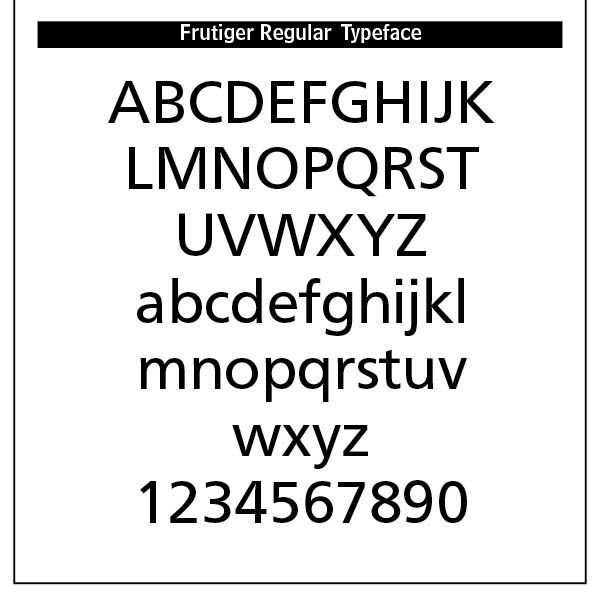
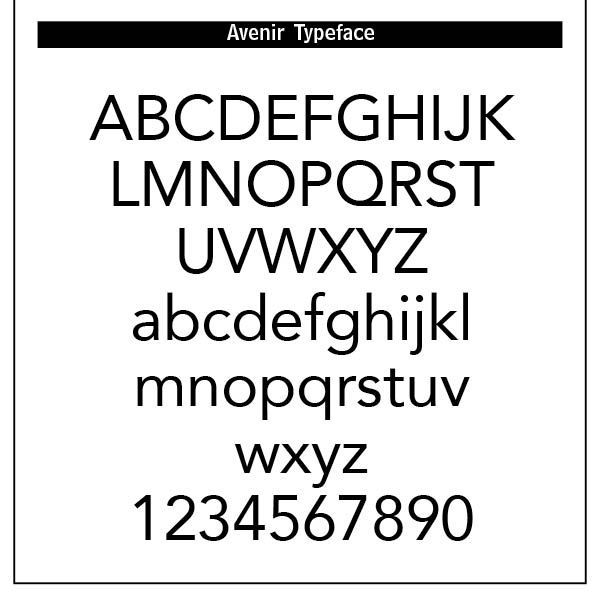
Adrian Frutiger (1928–2015) was a Swiss typeface designer whose career spanned hot metal, phototypesetting and digital typesetting eras. Frutiger’s most famous designs, Univers, Frutiger and Avenir, are landmark sans-serif families spanning the three main genres of sans-serif typefaces —neogrotesque, humanist and geometric.
Univers is a clear, objective form suitable for typesetting of longer texts in the sans-serif style. Starting from old sketches from his student days at the School for the Applied Arts in Zurich, he created the Univers type family. Folded into the Linotype collection in the 1980s, Univers has been updated to Univers Next, available with 59 weights. This lasting legible font is suitable for almost any typographic need. It combines well with Old Style fonts like Janson, Meridien, and Sabon, Slab Serif fonts like Egyptienne F, Script and Brush fonts like Brush Script, Blackletter fonts like Duc De Berry, Grace, San Marco and even some fun fonts. Univers is not a “free” font and must be purchased from Linotype.
Other faces by Frutiger are Frutiger and Avenir. These fonts were designed to be legible, versatile and anonymous, avoiding stylistic “noise” to focus on clear communication.
Swiss type used a systematized approach to typography, enabling consistent spacing, alignment and hierarchy, crucial for multilingual and complex layouts. Typography was seen as part of a harmonious, modern composition. Generous white space facilitated clarity and focus.
Swiss Type Theology
As you can well imagine, Swiss typefaces became the standard for corporate design, with Helvetica, in particular, adopted by forms and organizations worldwide for its neutrality and professionalism.
Magazines, journals and brochures have used such type for its legibility and clean structure. Posters composed by Swiss graphic designers use bold sans-serif type, strong alignment and minimalist color palettes. Scientific precision between text and image is the key here.
Helvetica and /or Univers typefaces are used in subway systems, airports and road signage. Advertising adopted Swiss typography for technology, finance and pharmaceuticals to convey credibility, modernity and objectivity.
Swiss type is fantastically beautiful. Far from being cold or rigid, such type sets the standard for modern visual culture. It displays the touch of God the Creator in its gratuitous nature, reflecting the eternal gratuity and self-giving of the Trinity as reflected in his creation.
In fact, Adrian Frutiger was noted to be a Calvinist, following the teachings of John Calvin, the genius behind Reformed theology and philosophy. Swiss type’s God-centered nature and creative order is typographically apparent. Printing was not neutral for Calvin. It was both a moral and spiritual force. It was a vocation, like any other, meant to glorify God by spreading truth and serving the Church. He notes in his famous Institutes of the Christian Religion —
"The Lord commands every one of us, in all the actions of life, to regard his vocation. For He knows with what great inquietude human nature flames, with what fickleness it is borne hither and thither, how its ambition longs to embrace various things at once. Therefore, lest everything should be thrown into confusion by our folly and rashness, He has appointed duties for every man in his particular way of life. And that no one may thoughtlessly transgress his limits, He has named these various kinds of living ‘callings.’"[2]
Calvin’s embrace of the printing and typographical trade helped fuel the Reformation, making Geneva a beacon of theological education and publishing. Frutiger imbibed this spirit and sense of divine calling and glorifying God in typography.
Helvetica and Univers are “really there.” Beauty is not so much “in the eye of the beholder” as it is “before the eyes of the beholder.”[3] Helvetica and Univers demand to be noticed, speaking to us as an intimate friend.
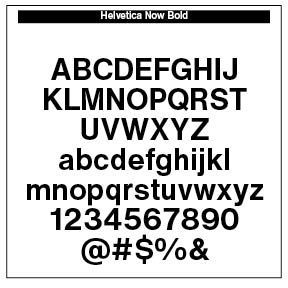
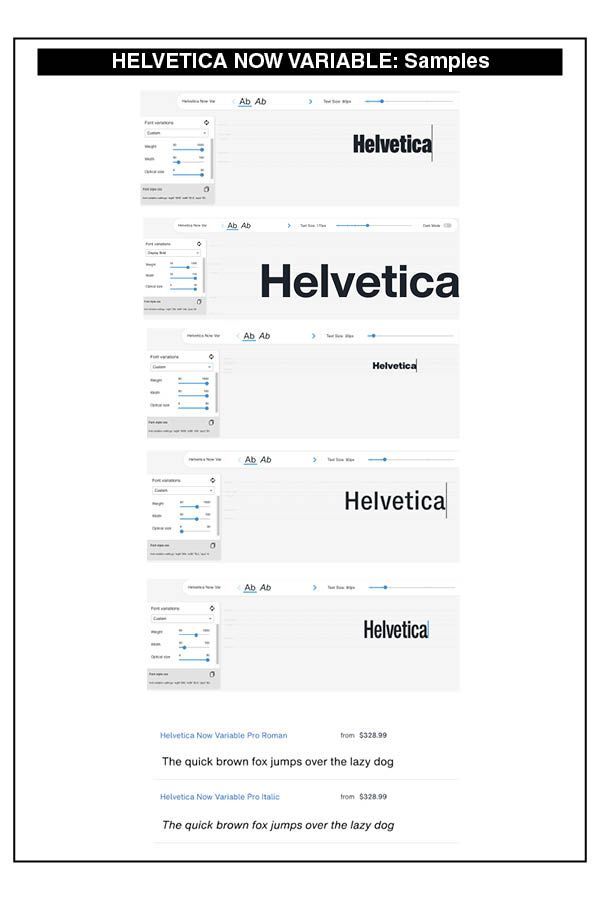
Both faces in their development also indicate subtle differences in their constitution and historical development. Helvetica Now Variable illustrates these difference within the overall unity perfectly.
Swiss type is eminently desirable. Its use is worldwide and continues unabated even today. Such type has crossed the barriers of tribe, tongue and nation.
Such type is “fitting” in that Helvetica and Univers display “an intrinsic quality which when perceived, pleases the mind by displaying a certain kind of fittingness.” [4] They work!
Finally, Swiss type reveals God’s purpose in creation and typography in its vast usefulness in all sorts of ways. Helvetica and Univers are “go to” types in the world of typographic excellence and usefulness.
Notes
1. Robin Williams, Adobe Magazine, July/August 1995. This section of “Helvetica’s Journey” can also be read in the author’s Typography Through The Years: A Selected History (Lulu Press, 2024)
2. John Calvin, Institutes of the Christian Religion, John T. McNeill (Editor), Ford Lewis Battles (Translator) (Westminster John Know Press, 1960 edition), Book III, Chapter 10, Section 6. In Geneva, Calvin worked closely with Huguenot printers and publishers, including Robert Estienne and Jean Crespin, both of whom fled persecution in France. Calvin helped turn Geneva into one of the most important publishing centers in Europe.
3. Pierce Taylor Hibbs, “Beauty Always Beckons,” Westminster Magazine (Vol. 5, Issue 2, 2025), 27.
4. Ibid, 28.